Being told you cannot have dental implants because of bone loss is one of the most common reasons patients contact Asensio Advanced Dentistry for a second opinion — and in the majority of cases, it is not the final answer. Bone loss reduces the options available to surgeons who rely on conventional implant techniques, but it does not eliminate them. At Asensio, patients with severe bone atrophy routinely receive fixed implant-supported teeth using techniques specifically developed for this clinical situation.
This guide explains why bone loss occurs, how it affects implant treatment, and which solutions are available depending on the degree of atrophy. If you have been assessed elsewhere and told that implants are not possible, contact us at office@dentalasensio.co.uk with your existing X-rays or CT scans. Dr. Lucía Asensio Romero, specialist in implantology and oral surgery with over 30 years of experience, will assess your case before you travel.
Why bone loss happens and why it matters for implants
Bone loss in the jaw — known as alveolar bone resorption — occurs when the bone no longer receives the stimulation it needs to maintain its density and volume. Teeth provide this stimulation through their roots. When teeth are lost and not replaced, the bone begins to resorb. The longer teeth have been missing, the greater the resorption.
| Cause of bone loss |
Effect on implant treatment |
| Long-term tooth loss without replacement |
Progressive resorption — insufficient volume for standard implants |
| Long-term removable denture use |
Denture pressure accelerates bone resorption beneath the denture |
| Severe periodontal disease |
Infection destroys supporting bone around teeth and implant sites |
| Failed previous implants |
Bone loss at the failed site reduces available volume for re-implantation |
| Peri-implantitis |
Active infection around existing implants causes progressive bone destruction |
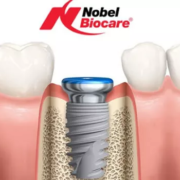
Standard dental implants require a minimum bone height and width to achieve the primary stability needed for osseointegration. When bone volume falls below these thresholds, conventional implant placement is not possible — which is why patients are often told treatment cannot proceed. However, several techniques exist specifically to address this situation.
Solutions for patients with bone loss
The appropriate solution depends on the degree of bone loss and its location — upper jaw, lower jaw or both. At Asensio, every case involving bone loss is assessed with a 3D CBCT scan before any treatment is recommended. The options available range from minimally invasive to surgical, and the goal in every case is to find the least aggressive approach that achieves a stable, long-term result.
All-on-4 with angled implants
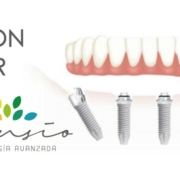
For many patients told they have insufficient bone, All-on-4 is the solution — because the angled posterior implants are specifically designed to maximise the use of available bone and avoid the most atrophic areas. By placing the two rear implants at 45 degrees, the technique accesses denser bone further back in the jaw and avoids the maxillary sinus in the upper arch, allowing fixed teeth without grafting in the majority of cases.
For a real example of this approach applied to a complex case of severe maxillary atrophy, see our complex All-on-4 case study.
Biomaterial augmentation
In cases where the bone volume is reduced but not critically so, biomaterials — synthetic or biological substances that promote bone regeneration — can be used to create the conditions for stable osseointegration without requiring a full bone graft. At Asensio, biomaterials are routinely used in combination with All-on-4 to resolve cases that would otherwise require sinus lift surgery.
Sinus lift (maxillary sinus augmentation)
When bone height below the maxillary sinus is insufficient for implant placement in the upper jaw, a sinus lift procedure increases the available bone by elevating the sinus membrane and placing bone graft material beneath it. This is indicated for cases where the All-on-4 angled approach cannot fully compensate for the atrophy and biomaterials alone are insufficient.
A sinus lift adds 4–6 months to the treatment timeline while the grafted bone consolidates. It is a well-established procedure with predictable outcomes when performed by an experienced surgeon.
Zygomatic implants
For patients with the most severe maxillary bone atrophy — where conventional implants, All-on-4 and biomaterials are all insufficient — zygomatic implants anchor in the cheekbone (zygoma) rather than the jaw. The cheekbone retains its density even after years of tooth loss and provides a stable foundation for a complete fixed upper arch prosthesis, fitted on the same day as surgery.
Zygomatic implants bypass the bone loss problem entirely. For full information see our zygomatic implants page.
How to choose the right approach
| Degree of bone loss |
Typical solution at Asensio |
| Mild — adequate bone with some reduction |
Standard All-on-4 or single implants |
| Moderate — below standard thresholds |
All-on-4 with biomaterial augmentation |
| Significant — sinus proximity or major atrophy |
Sinus lift + implants or All-on-4 with biomaterials |
| Severe — insufficient bone for any standard approach |
Zygomatic implants |
For a real example of a complex bone atrophy case resolved at Asensio, see our complex All-on-4 clinical case — full arch restoration in a patient previously rejected by other clinics.
Frequently asked questions
Can I definitely get implants if I have bone loss?
In the majority of cases yes. The right technique depends on the degree and location of the bone loss, which is why a 3D CBCT assessment is essential before any conclusion is reached. If you have been told implants are not possible, that assessment may have been based on conventional implant techniques only — without considering All-on-4, biomaterials or zygomatic implants.
Do I always need a bone graft if I have bone loss?
No. Many patients who would previously have required bone grafting can now be treated with All-on-4 angled implants and biomaterial augmentation — avoiding the additional surgery, cost and 6–12 month waiting period that grafting requires. Whether grafting is genuinely necessary depends on the specific anatomy of your case.
How do I get a second opinion at Asensio?
Send your existing X-rays, CT scans and any previous treatment plans to office@dentalasensio.co.uk. Dr. Lucía Asensio Romero will assess your case and advise whether treatment is feasible before you travel. The free first consultation in Valencia includes a new OPG X-ray and 3D CBCT scan if required.
Will bone loss get worse if I delay treatment?
Yes. Bone resorption is progressive — the longer teeth are absent and the bone unstimulated, the greater the atrophy. Early treatment preserves more bone and keeps more options available. Delaying also increases the likelihood of needing more complex and costly intervention.
Does implant treatment stop further bone loss?
Yes. Dental implants transmit chewing forces to the bone in the same way natural tooth roots do, stimulating the bone and preventing further resorption. This is one of the most important long-term advantages of implants over removable dentures, which sit on the gum and allow bone loss to continue. Call us on 0800 048 8058 or visit our dental implants abroad page for more information.
Related guides