are dental implants abroad safe

Are Dental Implants Abroad Safe? Reviews, Risks and What to Check

Are dental implants abroad safe? Yes — when the clinic is properly accredited, the dentist is qualified and registered, and the implant brand used has long-term clinical data behind it, dental implants abroad carry the same safety profile as treatment in the UK. Safety depends on the individual clinic, not the country on your passport stamp.

It’s a fair question to ask before booking flights for major dental surgery. Horror stories occasionally make headlines, and it’s hard to know from a website alone whether a clinic abroad is genuinely accredited, or just says so. Getting a clear, evidence-based answer — rather than either blind reassurance or unfounded fear — matters more for implants than almost any other treatment abroad.

At Asensio Advanced Dentistry in Valencia, implant treatment is overseen by Dr. Lucía Asensio Romero, a specialist in implantology with over 30 years of experience and more than 5,000 implants placed — her credentials and independent patient reviews are verifiable on Doctoralia, a platform entirely separate from our own site. This guide sets out exactly what to check, honestly, before you decide.

Is it safe to get dental implants abroad? What the evidence shows

Dental implants abroad are just as safe as dental implants placed in the UK, provided the clinic is properly accredited, the dentist is qualified and registered, and the implant systems used are globally recognised brands with long-term clinical data behind them. The safety of the treatment depends on the clinic and the dentist performing it, not on the country the patient happens to travel to — the same is true of implants placed in a UK high street practice, where standards also vary considerably between individual providers.

Spain in particular offers a strong safety profile for UK patients, since Spanish dental training is equivalent in length and academic standard to UK training, and Spain is fully EU-regulated, meaning UK patients benefit from the same cross-border healthcare protections that apply across the European Union. A Spanish-qualified dentist can, in fact, register directly with the UK’s General Dental Council without additional examination, which reflects how closely the two countries’ standards are aligned. We cover the full regulatory detail in our guide to dentistry standards in Spain.

What genuinely varies — in the UK and abroad alike — is the individual clinic: its accreditation, the implant brand it uses, whether its pricing is transparent, and what happens if a patient needs follow-up care after returning home. These are the factors that actually determine whether a specific dental implant abroad is safe, and they are the factors covered in detail in the rest of this guide, rather than simply the country printed on the passport stamp.

What can go wrong with dental implants — and how risk is managed

Risk Why it happens How a reputable clinic reduces it
Infection at the implant site Poor sterilisation or inadequate aftercare Independently audited sterilisation protocols (e.g. ISO 9001)
Implant failure / rejection Insufficient bone assessment, undiagnosed gum disease 3D CT scan before every case, recognised implant brands
Nerve or sinus damage Implant placed without accurate 3D planning Guided 3D surgery planned from CT scan beforehand
No support after flying home Clinic has no ongoing relationship once you leave Written lifetime guarantee, UK contact line, liaison with your home dentist

Being honest about what can go wrong with dental implants — anywhere, not just abroad — is part of making an informed decision, and a reputable clinic should be willing to discuss risk openly rather than only presenting a polished marketing message. The table above sets out the main risks associated with dental implant treatment and how a properly accredited clinic reduces each one in practice.

Infection at the implant site is one of the most common complications, usually linked to poor sterilisation standards or inadequate aftercare guidance rather than the implant procedure itself. Implant failure, where the implant does not fuse properly with the jawbone, is more likely when bone volume has not been properly assessed beforehand, or in patients with undiagnosed gum disease or heavy smoking habits that are not accounted for in the treatment plan. Rarer but more serious risks, such as nerve or sinus damage, are almost always linked to implants being placed without accurate 3D imaging and guided surgical planning beforehand.

The single biggest risk specific to dental implants abroad, rather than to implants generally, is what happens if a complication arises after the patient has already flown home — a clinic with no ongoing UK point of contact and no written guarantee leaves the patient with nowhere to turn if something needs attention. This is why the guarantee, the aftercare plan and the clinic’s willingness to liaise with a patient’s home dentist matter just as much as the surgery itself when judging whether dental implants abroad are genuinely safe for a given patient.

How to check if a clinic abroad is safe and reputable

Question to ask What a safe, reputable clinic offers
Is the clinic independently accredited? A verifiable certification such as ISO 9001, audited by a body like AENOR
Which implant brand is used? A globally recognised brand with long-term published data
Is pricing itemised? A written, itemised quote before you travel
What guarantee is provided? A written guarantee stating exactly what’s covered, and for how long
Can reviews be verified independently? Reviews on third-party platforms, not only the clinic’s own website

Because the safety of dental implants abroad depends on the individual clinic rather than the country, knowing what to check before booking is the most practical way to protect yourself, whichever destination you are considering for treatment. The table above sets out the key questions to ask any clinic — in the UK or abroad — before committing to treatment or booking flights, alongside what a genuinely reputable provider should be able to answer clearly.

Independent accreditation is one of the clearest signals: a clinic that holds a recognised quality certification such as ISO 9001, independently audited by a body such as AENOR in Spain, has its clinical processes reviewed against the same standard applied to major hospital groups, rather than simply describing itself as high quality on its own website with no external verification at all. The implant brand used matters for the same reason — globally recognised systems such as Nobel Biocare, Straumann and Klockner have decades of published clinical data behind them, while unnamed or unfamiliar implant brands are far harder to research independently before committing to surgery abroad.

A written, itemised quote before you travel, and a clear written guarantee stating exactly what is covered and for how long, are both signs of a transparent clinic rather than one hoping patients won’t ask too many questions before booking their flights. Our guide to the best countries for dental implants abroad covers this checklist in the context of comparing different destinations, if you are still deciding where to travel rather than which specific clinic to choose for your treatment.

What do patients say? Dental implants abroad reviews

Independent reviews are one of the most reliable ways to judge whether dental implants abroad are safe in practice, precisely because they come from patients with no reason to only tell a flattering story about their experience. Rather than relying solely on a clinic’s own marketing claims, checking what previous patients actually experienced — the communication, the results, the value for money and the overall trip — gives a far more grounded picture than price and treatment descriptions alone can provide.

At Asensio, patients such as Lynne, who travelled from the UK for dental implants abroad, and Noel, who had All-on-4 treatment after travelling from Ireland, have shared video testimonials describing their own experience of the treatment process, the results and what it was like combining dental treatment with a trip to Valencia. You can watch these and other real patient accounts in full on our dental implants abroad reviews page, rather than taking our word for the outcomes alone.

When researching dental implants abroad reviews for any clinic, it is worth checking reviews on independent platforms as well as the clinic’s own website, since third-party sites are considerably harder to curate selectively than a clinic’s own testimonials page. Dr. Lucía Asensio Romero’s professional profile, including independent patient reviews, can be verified directly on Doctoralia, a platform entirely separate from Asensio’s own site. Consistent themes across genuine reviews — clear communication, transparent pricing and a well-organised trip — are generally a more reliable safety signal than any single claim made on a clinic’s own homepage.

Asensio’s accreditation, guarantees and safety standards

Asensio Advanced Dentistry holds ISO 9001 certification from AENOR, meaning our clinical processes are independently audited to the same standard applied to major European hospital groups, rather than being a claim we make about ourselves. Every implant case is planned using a Planmeca Promax 3D digital scanner and guided surgery before a single implant is placed, and we use exclusively Nobel Biocare and Klockner implant systems — two of the most clinically validated implant brands in the world, both with decades of published long-term data.

Every implant case carries a lifetime guarantee on materials, set out in full on our dental guarantee page, and every treatment plan begins with a free, no-obligation consultation and written, itemised quote, so patients know exactly what is included before committing to travel. Dr. Lucía Asensio Romero, who oversees implant treatment at the clinic, has over 30 years of experience and more than 5,000 implants placed, and her registration and clinical background are independently verifiable rather than simply stated on our own site.

Spain’s EU-regulated status also means UK patients are protected by the same cross-border healthcare framework that applies across the European Union, and Spanish dental qualifications are recognised by the UK’s General Dental Council without further examination, reflecting how closely the two countries’ training and regulatory standards are aligned. Taken together — independent accreditation, recognised implant brands, a written guarantee and EU regulatory protection — these are the concrete, checkable factors that answer whether dental implants abroad at a specific clinic are genuinely safe, rather than a general impression either way. See our full reasons to choose Asensio for the complete picture.

Why choose Asensio for safe dental implants abroad

Choosing where to have dental implants abroad is ultimately a decision about trust as much as price, and we would rather patients make that decision with complete information than be persuaded by marketing alone. We welcome second opinions from patients who have already been quoted elsewhere, whether in the UK or by another clinic abroad, and are happy to review an existing treatment plan, X-rays or CT scans free of charge before you commit to travelling to Valencia for a consultation of your own.

Every question raised in this guide — accreditation, implant brand, guarantee, regulation and independent reviews — can be checked directly for Asensio rather than taken on trust: our ISO 9001 certification, our exclusive use of Nobel Biocare and Klockner implants, our lifetime guarantee, Spain’s EU-regulated status, and independent patient reviews on Doctoralia and our own testimonials page are all verifiable before you book a flight or commit to any treatment.

If you are still weighing up whether dental implants abroad are the right choice for you, the free first consultation — including a 3D CT scan and a written treatment plan — comes with no obligation to proceed, and is the most reliable way to get a clear, personalised answer rather than relying on general reassurance from any website, including this one. Call us free on 0800 048 8058 or email office@dentalasensio.co.uk to discuss your case, or start with our full overview of dental implants abroad at Asensio to see every treatment option currently available to you.

Frequently asked questions about dental implants abroad safety

Are dental implants abroad actually safe?

Yes, provided the clinic is independently accredited, the dentist is properly qualified and registered, and the implant brand used has long-term published clinical data. Safety depends on the individual clinic, not the country — always check accreditation, implant brand and guarantee before booking.

What is the biggest risk of getting dental implants abroad specifically?

The main risk specific to travelling abroad, rather than to implants generally, is limited support if a complication arises after you’ve flown home. Choose a clinic with a written guarantee, a UK contact line, and a willingness to liaise with your home dentist if needed.

Where can I read genuine dental implants abroad reviews for Asensio?

Real patient video testimonials are on our dental implants abroad reviews page. You can also verify Dr. Lucía Asensio Romero’s independent reviews on Doctoralia, a platform separate from our own site.

Is Spain a safe country for dental implants?

Yes. Spain is fully EU-regulated, Spanish dental training is equivalent to UK training, and Spanish-qualified dentists can register with the UK’s General Dental Council without further examination. See our full guide to dentistry standards in Spain.

What should I check before booking dental implants abroad?

Check independent accreditation (such as ISO 9001), the implant brand used, whether pricing is itemised in writing, what guarantee is provided, and whether reviews can be verified on independent platforms rather than only the clinic’s own website.

Related guides

contact lens veneers price

Contact Lens Veneers Price: The Complete Cost Guide for UK Patients

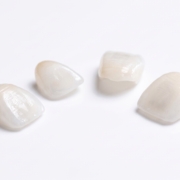
Contact lens veneers price at Asensio in Valencia starts from £520 per tooth — compared to £900–£1,400 at UK private clinics — for what is more formally known as Lumineers, an ultra-thin porcelain veneer roughly 0.2mm thick, about the same as a contact lens, which is where the nickname comes from.

Searching for “contact lens veneers price” instead of “Lumineers price” often turns up a confusing mix of results, since the two terms describe exactly the same treatment but aren’t always priced or explained consistently online. Knowing you’re looking at genuine, brand-certified Lumineers pricing — not a generic imitation — matters before you commit to travelling anywhere for treatment.

At Asensio Advanced Dentistry in Valencia, contact lens veneers are placed by Dr. Lucía Asensio Romero, a specialist in cosmetic dentistry and smile design — her clinical credentials are independently verifiable on Doctoralia. We are an accredited Lumineers provider using genuine CERINATE porcelain, backed by over 20 clinical studies showing 100% retention over 20 years.

What are “contact lens veneers”?

“Contact lens veneers” is the informal name patients often use for Lumineers, a brand of ultra-thin porcelain veneer roughly 0.2mm thick — about the same thickness as a contact lens, which is exactly where the nickname comes from. Unlike traditional porcelain veneers, which require a small amount of the natural tooth to be filed down to make room for the veneer, Lumineers are thin enough in most cases to be bonded directly onto the existing tooth surface with little to no preparation at all.

Because so little or no natural tooth structure is removed, Lumineers are considered a reversible cosmetic treatment in most cases, unlike traditional veneers or crowns, which permanently alter the tooth underneath. They are made from a patented material called CERINATE porcelain, used exclusively by Lumineers and backed by more than 20 clinical studies showing 100% retention with no discolouration over 20 years — a track record that is unusually well documented for a cosmetic dental product, and one of the reasons the brand has become so widely searched for by name and by nickname alike.

Many patients researching “contact lens veneers price” online do not realise they are searching for Lumineers by another name, which is one reason pricing information can be confusing to find — some results discuss Lumineers specifically, others discuss veneers in general, and the two are not always priced the same. Because Lumineers is a registered brand rather than a generic veneer type, only clinics certified to use the CERINATE material can legitimately advertise the treatment, which is worth checking before booking anywhere. At Asensio, contact lens veneers, or Lumineers, are placed by Dr. Lucía Asensio Romero, a specialist in cosmetic dentistry and smile design, using the same CERINATE porcelain used by leading UK clinics. See our full Lumineers abroad guide for the complete clinical picture.


Contact lens veneers price: UK vs Spain per tooth

Where Price per tooth Saving vs UK
Asensio, Valencia (Spain) £520 —
UK private clinic (typical range) £900 – £1,400 £380 – £880

The price of contact lens veneers in the UK typically runs from £900 to £1,400 per tooth at a private cosmetic dental clinic, depending on the clinic, the city and the complexity of the case. At Asensio in Valencia, the same Lumineers treatment — using the identical CERINATE porcelain and the same brand-certified technique — costs £520 per tooth, a saving of between £380 and £880 per tooth compared with UK private pricing.

This saving comes without any reduction in the standard of materials, since Lumineers is a single, patented brand of porcelain veneer manufactured to one specification worldwide — the CERINATE ceramic used at Asensio is exactly the same material used by clinics charging UK prices, made in the same laboratory process regardless of which country the dentist practises in. What changes between the UK and Spain is the cost of running the clinic — staff wages, rent and overheads — not the product itself, which is why the price gap for Lumineers specifically tends to be larger in percentage terms than for many other cosmetic dental treatments.

The £520 per-tooth price at Asensio includes the free initial consultation and smile design assessment, the Lumineers themselves, fitting across two visits, and a 3-year guarantee on materials. As with any per-tooth cosmetic price, the final total for your case depends on how many teeth you want to treat, which is covered in the next section, and every figure quoted is confirmed in writing after your free consultation before you commit to booking flights or travelling. See the full treatment price list for every procedure at Asensio.

How much does a full smile of contact lens veneers cost?

Number of teeth Asensio (Spain) Typical UK cost
6 teeth ~£3,120 £5,400 – £8,400
8 teeth ~£4,160 £7,200 – £11,200
10 teeth ~£5,200 £9,000 – £14,000

Because Lumineers are priced per tooth rather than as a fixed smile package, the total cost of a smile makeover with contact lens veneers depends entirely on how many teeth you choose to treat. Many patients treat only the teeth visible when smiling — typically the six to ten upper front teeth — rather than every tooth in the mouth, which keeps the total cost proportional to the visible improvement rather than to the full set of teeth.

As a guide calculated from the standard £520 per-tooth price at Asensio, six contact lens veneers cost around £3,120, eight cost around £4,160, and a full ten-tooth smile makeover costs around £5,200 — compared with UK equivalents of roughly £5,400 to £8,400 for six teeth, £7,200 to £11,200 for eight teeth, and £9,000 to £14,000 for ten teeth, depending on the UK clinic used for comparison. These figures are a reference point rather than a fixed package price, since some patients need fewer teeth treated to achieve their desired result and others need more, particularly patients with a wider smile who show more teeth when speaking or laughing.

The exact number of teeth needed for a natural-looking result is assessed individually during your free consultation and smile design session, using photographs of your smile to recommend the minimum number of veneers that will achieve your goals — treating more teeth than necessary is neither clinically required nor cost-effective. Every quote from Asensio is itemised by the number of teeth agreed at consultation, confirmed in writing before you travel, so there is no ambiguity about the total cost once you commit to treatment.

What affects the price of contact lens veneers?

Factor How it affects price
Number of teeth treated Largest factor — priced individually per tooth, not as a fixed package
Lumineers vs standard porcelain veneer Lumineers use patented CERINATE porcelain, priced higher per tooth
Condition of underlying teeth Minor reshaping needs rarely change price but may affect planning time
Combined teeth whitening Optional, quoted separately, not required for treatment

Several factors influence the total price of contact lens veneers beyond the simple per-tooth rate, and understanding them helps explain why two patients researching the same treatment can end up with very different final quotes online. The table above summarises the main variables that affect the final figure.

The number of teeth treated is the largest single factor, since Lumineers are priced individually rather than as a fixed-price smile package — a single tooth repair costs a fraction of a full ten-tooth smile makeover, so the headline per-tooth price only tells part of the story until you know how many teeth you actually need. The condition of the underlying teeth also matters: teeth with old fillings, minor chips or mild discolouration are usually straightforward to cover with no extra preparation, while teeth needing minor reshaping or a small amount of enamel adjustment first may take slightly longer to plan, though this rarely changes the per-tooth price itself.

Whether you choose Lumineers specifically or a standard porcelain veneer also affects price, since Lumineers use the patented CERINATE porcelain exclusively licensed to Lumineers-certified clinics, which costs more to source than generic porcelain veneer material — this trade-off is covered in more detail in the next section. Finally, some patients combine contact lens veneers with teeth whitening on the remaining, untreated teeth to achieve a uniform shade across the whole smile, which is a separate, optional cost quoted alongside the veneers during your consultation, and is entirely your choice rather than a requirement of the treatment.

Contact lens veneers vs traditional porcelain veneers: which costs less?

Lumineers are not the only type of veneer available, and traditional porcelain veneers are usually a little cheaper per tooth, since they use a wider range of ceramic materials rather than the single patented CERINATE porcelain that Lumineers requires. At Asensio, traditional porcelain veneers cost £414 per tooth, compared with £520 per tooth for Lumineers — a difference of £106 per tooth in favour of standard porcelain veneers, or around £636 across a six-tooth smile makeover.

That price difference reflects a genuine clinical trade-off rather than simply a mark-up: traditional porcelain veneers require a small amount of the natural tooth to be filed down to fit properly, which is an irreversible step, while Lumineers are thin enough in most cases to bond directly onto the tooth with little or no preparation, making the treatment reversible. Patients who want to preserve as much natural tooth structure as possible, or who are unsure about committing to a permanent change, often choose the slightly higher price of Lumineers specifically for this reason, treating the extra cost as the price of reversibility.

Both options are placed by the same specialist team at Asensio, carry the same 3-year guarantee, and are typically completed in two visits to Valencia, so neither option involves a longer or more disruptive trip. Which represents better value for a given patient depends on priorities as much as price — for a full clinical comparison of thickness, reversibility and suitability between the two, see our complete Lumineers abroad guide, which sets out both options side by side in detail alongside our standard porcelain veneers page.

What’s included in your contact lens veneers price?

Stage What’s included Visit required
1. Free consultation Smile design assessment, photographs, written itemised quote Yes (or remote assessment)
2. Preparation & impressions Little to no tooth preparation, digital scans taken Yes
3. Manufacturing Custom Lumineers made in laboratory from CERINATE porcelain No
4. Fitting Bonding, bite and shape adjustment, 3-year guarantee begins Yes

A contact lens veneers price should cover more than just the porcelain itself, and at Asensio every quote is itemised so you know exactly what is included before you travel. The table above sets out the stages involved in treatment and what each one covers, from first consultation through to the guarantee, so there is no ambiguity before you book.

The free first consultation includes a full smile design assessment, using photographs and, where relevant, digital imaging to plan how many teeth need treating and what the finished result will look like — this step is included at no cost and comes with no obligation to proceed with treatment afterwards. Once you confirm treatment, the Lumineers themselves, the fitting appointments and the bonding process are all covered within the quoted per-tooth price, along with the 3-year guarantee on materials that covers manufacturing or bonding defects for the period stated in writing.

Most patients complete the whole process in two visits to Valencia: an initial visit for assessment, photographs and, in some cases, digital mock-ups of the new smile, followed by a second visit once the custom Lumineers have been manufactured in the laboratory, for fitting and any final adjustments to shape or bite. Because little or no tooth preparation is needed, most patients require no injections during either visit and report no sensitivity afterwards, which is one of the most consistently reported advantages of choosing Lumineers over a treatment that requires filing down the tooth first, and one of the main reasons patients ask for it by name once they understand what it involves.

Why choose Asensio for contact lens veneers abroad?

At Asensio Advanced Dentistry in Valencia, contact lens veneers are placed by Dr. Lucía Asensio Romero, a specialist in cosmetic dentistry and smile design with extensive experience in Lumineers and porcelain veneer treatments for UK patients travelling abroad. As an accredited Lumineers provider, Asensio uses the genuine CERINATE porcelain rather than a generic ultra-thin veneer alternative, which matters because the clinical track record — 100% retention with no discolouration over 20 years in published studies — applies specifically to the branded Lumineers product, not to unlicensed imitations sold under similar-sounding names by clinics that are not certified providers.

Our ISO 9001 certification from AENOR means our clinical processes are independently audited to the same standard applied to major European hospital groups, and every smile design case begins with a free, no-obligation consultation using photographs and digital planning tools to preview your result before committing to treatment. We also welcome patients who have already been quoted elsewhere, in the UK or abroad, and are happy to review an existing treatment plan or set of photographs free of charge before you commit to travelling to Valencia for your consultation.

Every Lumineers and porcelain veneer case at Asensio carries a 3-year guarantee on materials, and our full dental guarantee page sets out exactly what is and isn’t covered. Call us free on 0800 048 8058 or email office@dentalasensio.co.uk to book your free consultation, or browse real patient results in our cosmetic dentistry before and after gallery before you decide which option is right for your smile.

Frequently asked questions about contact lens veneers price

How much do contact lens veneers cost per tooth?

At Asensio, contact lens veneers (Lumineers) cost £520 per tooth, compared with £900 to £1,400 per tooth at a UK private clinic — a saving of £380 to £880 per tooth. See our full price list for every treatment.

Are contact lens veneers the same as Lumineers?

Yes. “Contact lens veneers” is an informal nickname for Lumineers, referring to their ultra-thin, roughly 0.2mm profile. They are the same branded product, made from the same patented CERINATE porcelain, wherever you see either term used.

How much does a full smile of contact lens veneers cost?

As a guide, six teeth cost around £3,120, eight around £4,160, and ten around £5,200 at Asensio, calculated from the standard per-tooth price. UK equivalents typically run £5,400 to £14,000 for the same number of teeth. Your exact quote depends on how many teeth you need, confirmed at your free consultation.

Are contact lens veneers cheaper than traditional porcelain veneers?

No — traditional porcelain veneers are slightly cheaper, at £414 per tooth versus £520 for Lumineers at Asensio, because Lumineers use the patented CERINATE porcelain. The trade-off is that Lumineers usually require little or no tooth preparation and are reversible, while traditional veneers are not.

Does the price include the consultation and guarantee?

Yes. The free first consultation, smile design assessment, fitting across two visits and a 3-year guarantee on materials are all included in the quoted per-tooth price at Asensio, with no hidden extras once your itemised quote is confirmed.

Related guides