
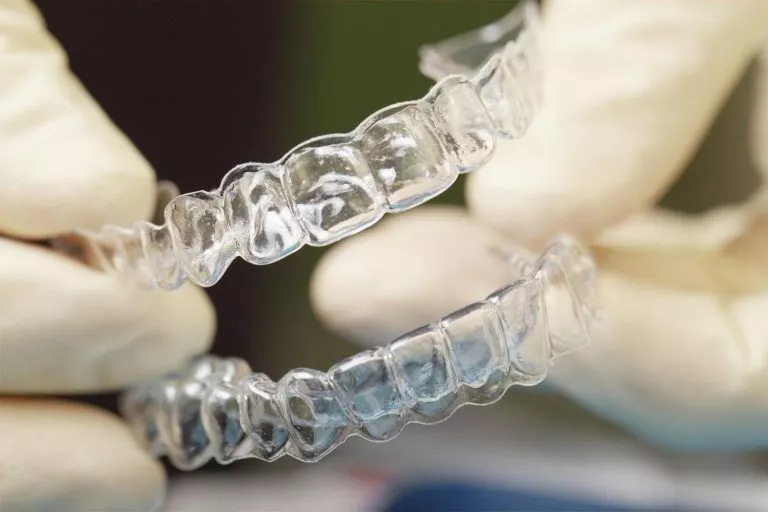
Night Guard for Bruxism: What It Is and How It Works
A night guard — also called an occlusal splint or bite guard — is a custom-made dental device worn over the teeth during sleep to protect against the damage caused by bruxism (teeth grinding and clenching). Dr. Lucía Asensio Romero, specialist in oral medicine and TMJ dysfunction at Asensio Advanced Dentistry in Valencia, prescribes and fits night guards as part of a comprehensive bruxism assessment that includes bite analysis and jaw examination.
Bruxism affects an estimated 10% of adults and up to 15% of children — and the majority are unaware they grind their teeth until a dentist identifies the signs of wear. Left untreated, bruxism causes progressive tooth wear, fractures, jaw pain, headaches and can ultimately require expensive restorative treatment.
The first consultation is completely free. Call us on 0800 048 8058 or email office@dentalasensio.co.uk to book.
What a night guard does
| Function | How it helps |
|---|---|
| Protects teeth from wear | The guard absorbs grinding forces — the guard wears instead of the teeth |
| Prevents fractures | Distributes bite forces evenly, reducing the risk of cracked teeth and failed restorations |
| Relieves jaw muscle tension | Repositions the jaw in a relaxed position — reduces headaches, neck pain and facial soreness |
| Protects dental implants and crowns | Bruxism is a major risk factor for implant failure and ceramic fractures — a guard is often prescribed alongside restorative treatment |
| Reduces TMJ dysfunction symptoms | Unloads the temporomandibular joint — first-line treatment for TMJ disorders |
Types of night guard
| Type | Material | Best for |
|---|---|---|
| Hard acrylic splint | Rigid acrylic | Moderate to severe bruxism — most durable and effective |
| Soft guard | Flexible thermoplastic | Mild bruxism — more comfortable initially |
| Dual-laminate splint | Soft inner / hard outer | Combination of comfort and protection |
Frequently asked questions
How is a night guard made at Asensio?
A digital or physical impression of your teeth is taken at the first appointment. The guard is then custom-fabricated in a dental laboratory to fit your exact bite. Fitting and adjustment is completed at a second appointment. Both visits can be completed in a single trip to Valencia.
Can I get a night guard if I have dental implants?
Yes — and it is strongly recommended. Bruxism significantly increases the risk of peri-implantitis and ceramic crown fracture. Patients with dental implants or zirconia crowns who grind their teeth should always wear a protective splint.
Is a night guard the same as a TMJ splint?
Not exactly — there are different types of occlusal splints for different purposes. A bruxism guard primarily protects the teeth. A TMJ repositioning splint is designed to change the jaw position and unload the joint. See our guide to TMJ dysfunction treatment for more detail.
Related guides
- TMJ dysfunction & bruxism treatment — specialist assessment and treatment of jaw disorders
- Orofacial pain treatment — headaches, jaw pain and facial tension
- Dental implants abroad — night guard recommended for implant patients with bruxism
- Dental implants before & after — real patient results
- How dental tourism in Spain works — planning your trip to Valencia