
Osseointegration: How Dental Implants Bond with Bone
Osseointegration is the biological process by which a dental implant fuses with the surrounding jawbone, creating a stable, permanent foundation for the crown or prosthesis placed on top. It is the fundamental mechanism that makes dental implants the gold standard for tooth replacement — and understanding it helps patients set realistic expectations for their treatment timeline and recovery.
The term was coined by Swedish orthopaedic surgeon Professor Per-Ingvar Brånemark, who first observed the process in the 1950s and later pioneered the use of titanium implants in dentistry. At Asensio Advanced Dentistry in Valencia, osseointegration is the foundation of every implant procedure performed by Dr. Lucía Asensio Romero, specialist in implantology and oral surgery with over 30 years of clinical experience.
What happens during osseointegration?
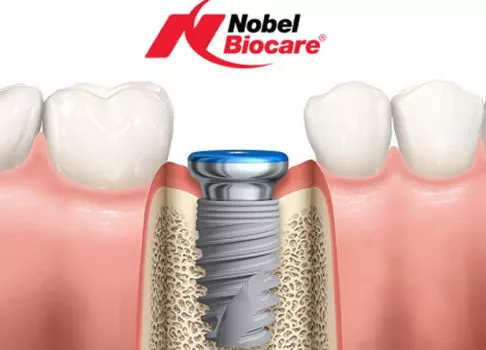
When a titanium implant is placed into the jawbone, the body does not recognise it as a foreign object — it recognises it as a surface suitable for bone attachment. Titanium is biocompatible: its surface properties allow bone cells (osteoblasts) to adhere, proliferate and eventually form new bone tissue directly on the implant surface. Over time, the implant becomes structurally integrated with the surrounding bone, indistinguishable in terms of mechanical function from a natural tooth root.
| Stage | Timeframe | What happens |
|---|---|---|
| Initial healing | Days 1–7 | Blood clot forms around implant, inflammatory response begins, soft tissue starts to close |
| Early osseointegration | Weeks 2–4 | Osteoblasts begin depositing new bone tissue on implant surface, early mechanical stability develops |
| Progressive integration | Months 1–3 | Bone density around implant increases, implant stability improves significantly |
| Full osseointegration | Months 3–6 | Mature bone has formed around the full implant surface — definitive restoration can be fitted |
How long does osseointegration take?
The osseointegration period typically takes between 3 and 6 months, depending on the patient’s bone density, general health, implant location and loading protocol. Lower jaw implants tend to integrate faster than upper jaw implants because the bone is denser. Patients with good bone volume and no systemic conditions affecting healing are at the shorter end of this range.
During the osseointegration period, patients wear a provisional prosthesis — a functional restoration that allows normal eating and speaking while the implant integrates. For All-on-4 patients this is a fixed provisional arch fitted on the same day as surgery. For single implant patients it is typically a temporary crown.
What affects osseointegration success?
| Factor | Effect on osseointegration |
|---|---|
| Implant material and surface | Titanium with a roughened surface promotes faster and stronger bone attachment than smooth surfaces |
| Bone quality and volume | Denser, well-vascularised bone integrates more reliably and quickly |
| Smoking | Significantly impairs blood supply to bone tissue, slowing integration and increasing failure risk |
| Uncontrolled diabetes | Impairs immune function and wound healing, increasing complication risk |
| Surgical precision | Overheating bone during drilling or poor implant positioning compromises initial stability |
| Oral hygiene | Bacterial infection around the implant site is the leading cause of osseointegration failure |
Aftercare during osseointegration
The osseointegration period requires specific aftercare to protect the implant while the bone forms. At Asensio, every patient receives written aftercare instructions before leaving the clinic. The key principles are:
| Period | What to do | What to avoid |
|---|---|---|
| First 24 hours | Apply ice packs, rest, take prescribed medication | Rinsing, spitting, hot food and drink |
| First week | Soft diet, gentle oral hygiene, antibiotics as prescribed | Strenuous exercise, smoking, alcohol, hard food |
| Osseointegration period | Daily cleaning routine, regular professional reviews | Smoking, excessive force on the provisional prosthesis |
For full guidance on caring for your implants during and after osseointegration, see our dental implant care guide and our peri-implantitis guide — the main infection risk during this period.
Frequently asked questions
Can I feel osseointegration happening?
No. The process is entirely biological and occurs without any sensation the patient can perceive. Some mild sensitivity around the implant site in the first few weeks is normal as the soft tissue heals, but osseointegration itself is painless. If you experience persistent pain or swelling after the first week, contact us promptly.
What happens if osseointegration fails?
Osseointegration failure — where the implant does not bond with the bone — is uncommon but does occur. Signs include implant mobility, persistent pain or infection. In most cases the implant can be removed, the site treated and a new implant placed after a healing period. At Asensio, all implant materials carry a lifetime guarantee — if an implant fails due to material defect, replacement is covered.
Does osseointegration happen faster with better implant brands?
Implant surface technology significantly affects osseointegration speed and reliability. Nobel Biocare and Klockner implants — the systems used exclusively at Asensio — use clinically validated surface treatments that promote faster and more predictable bone attachment than generic implant systems. This is one of the key reasons we do not compromise on implant brand.
Can I fly back to the UK after implant surgery?
Yes. Most patients fly home within 2–3 days of surgery. Flying does not affect osseointegration. The key is ensuring the initial healing period is managed correctly before travel and that you have the aftercare instructions and emergency contact details before you leave Valencia.
How do I know when osseointegration is complete?
Osseointegration is confirmed at the second visit to Asensio using clinical assessment and radiographic imaging. The implant is tested for stability and bone levels are evaluated on the X-ray before the definitive restoration is fitted. Call us on 0800 048 8058 or visit our dental implants abroad page for more information.
Related guides
- Dental implants abroad at Asensio — full overview of implant treatments for UK patients
- Immediate dental implants — when the implant is placed on the same day as extraction
- Care of dental implants — how to protect your implants long term
- Peri-implantitis — the main infection risk and how to prevent it
- Do dental implants hurt? — what to expect after your implant surgery
- All-on-4 dental implants abroad — full arch replacement with same-day fixed teeth